
In 2025, Kiss the Ground awarded 215 grants totaling $500K to support farmers and ranchers with equipment, supplies, and regenerative agriculture training—impacting 73,000 acres across the U.S. We remain committed to helping farmers and ranchers transition to regenerative practices by reducing the financial barriers and risks that come with it.
Get to know the remarkable people transforming millions of acres into regenerative agriculture for human and planetary health.
Get to know each farmer by clicking on their profile. We will be adding more recipient features throughout 2025.
Know a U.S. farm or farmer that should work with Kiss the Ground?
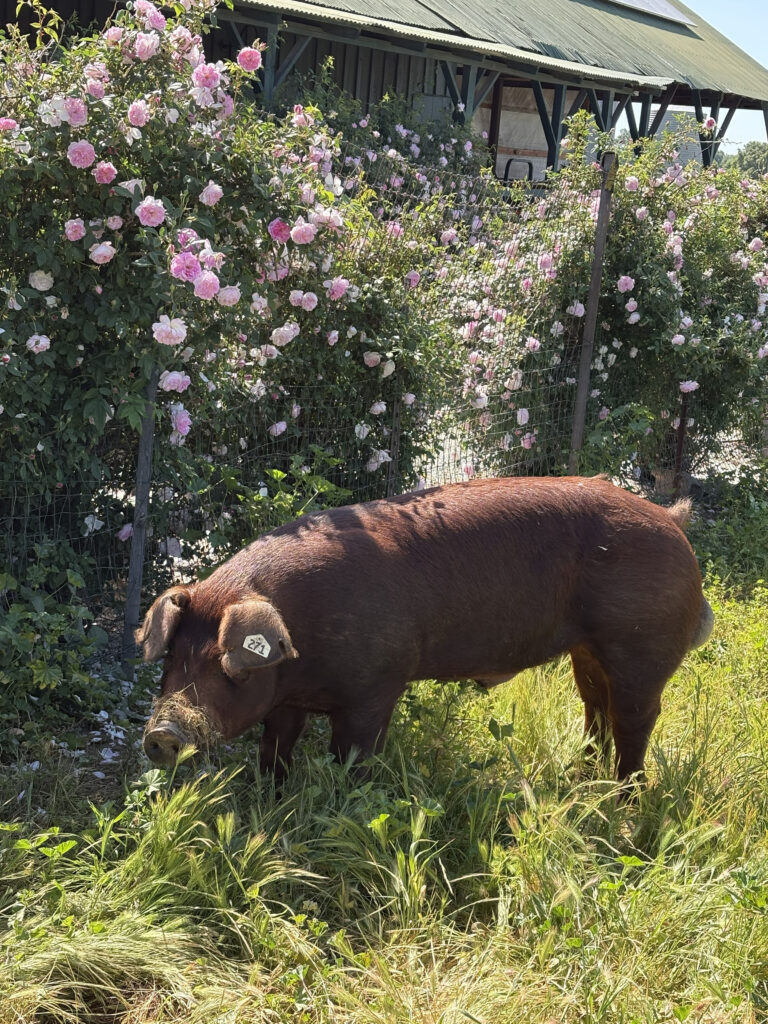
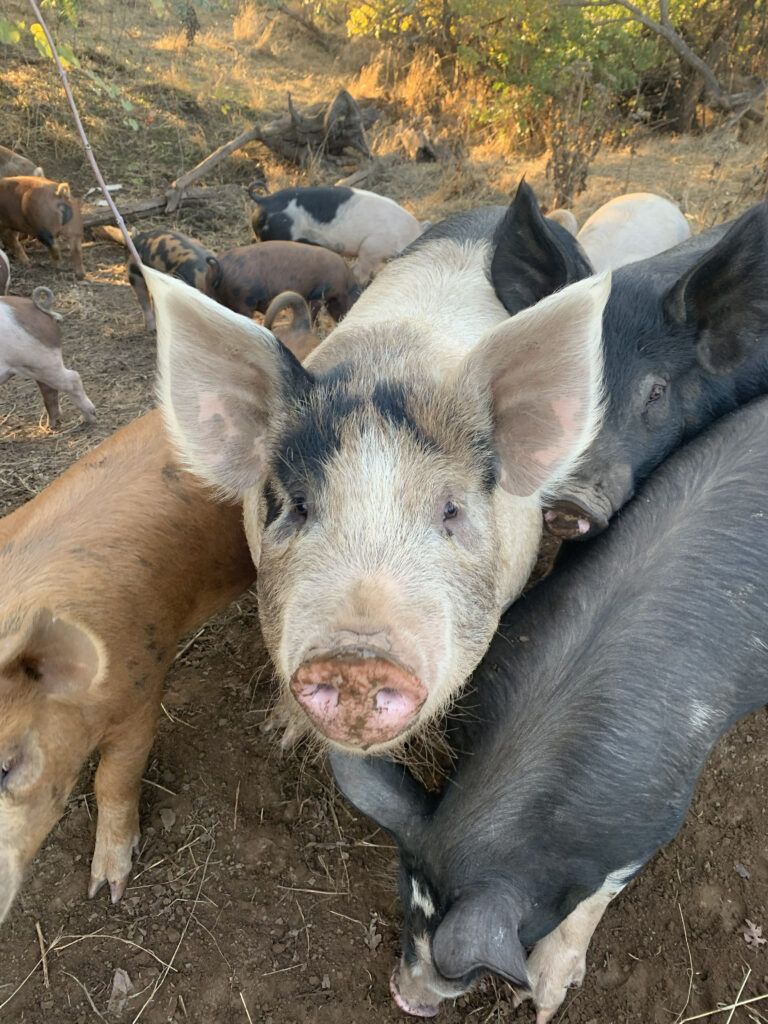
We are expanding our pig paddocks to ensure we do not overuse the existing ones and can provide a truly pasture-raised pork product. We move the pigs according to a grazing plan to ensure we are not over-utilizing the paddocks, and we measure our soil health using Savory’s EOV method which we are trained in. Typically, pastured pork operations over-utilize their paddocks, and we aim NOT to do this. This grant will help us expand this critical enterprise while maintaining the integrity of our regenerative goals. We plan to install exterior hard fencing and interior electric fencing by April 2025. After we set up the watering system in May, we can invite the pigs in!
We continue to have demand for our healthy meats locally, but we simply cannot keep up! This grant will allow us to increase the production of our pork and supply residents locally. Amador County has a relatively low median household income, and we strive to keep our meats reasonably priced so our local community can afford to purchase them.
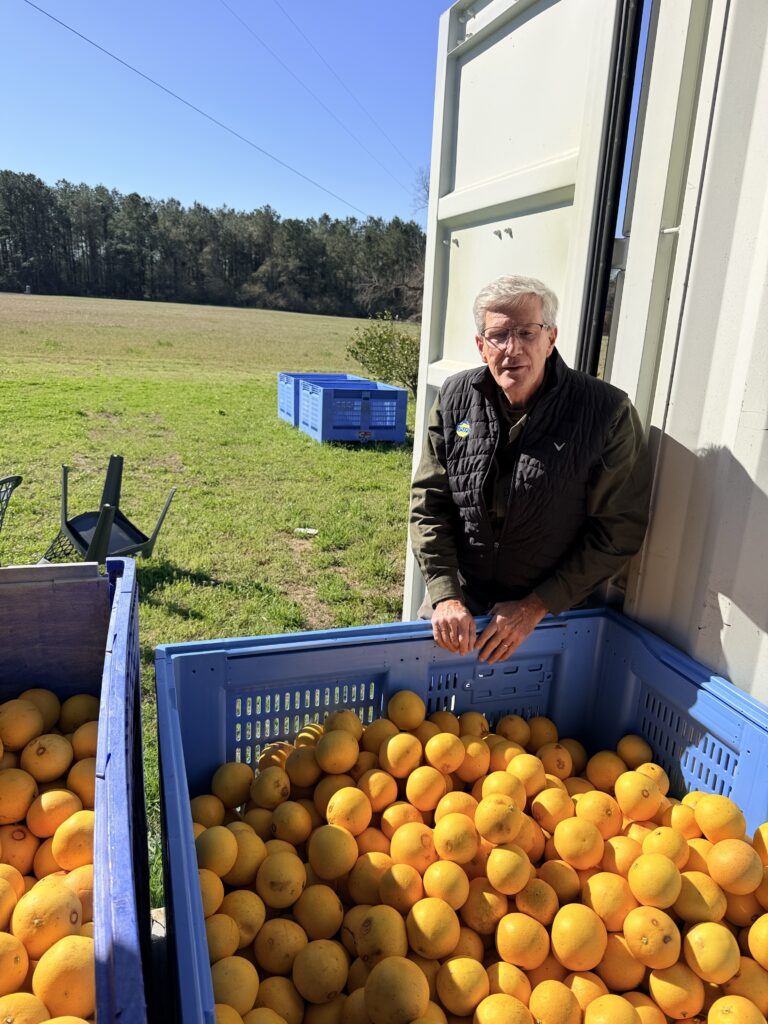
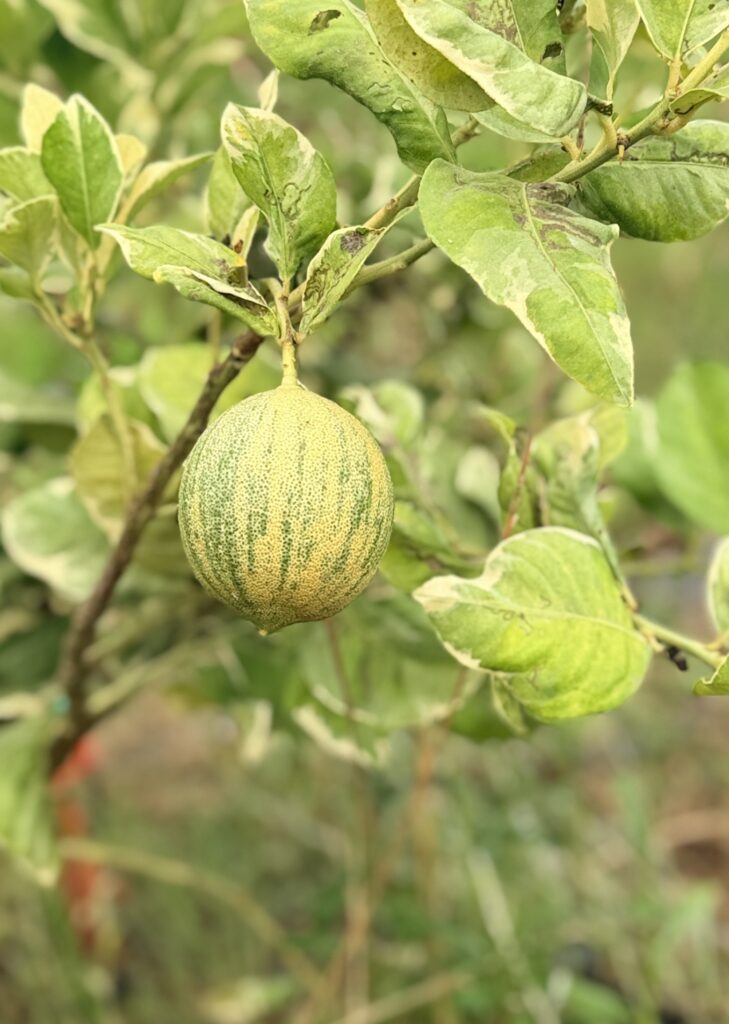
Citrus Squeeze, a small-scale, family-run citrus farm, plans to conduct a study that aims to identify whether the regenerative practices at Citrus Squeeze result in higher nutrient levels in their fruits compared to conventionally grown citrus grown nearby and harvested in the same time frame. Citrus Squeeze also plans to use regenerative agriculture to help reverse the impact of HLB/Citrus Greening that has devastated the citrus population in the U.S.
Proving the increased nutrient density of regeneratively grown produce will justify considerable value-add for my crop and be a tremendous motivation to move other growers to regenerative. With my first modest harvest I shipped to 36 states! The demand for nutrition is growing exponentially. The second harvest, still modest, went to 45 states. Beyond having a sustainable operation (financially), my goal is to be a voice that links the health of our land as a continuum through the crops we grow to its impact on the human body to prove how inextricably linked they are.
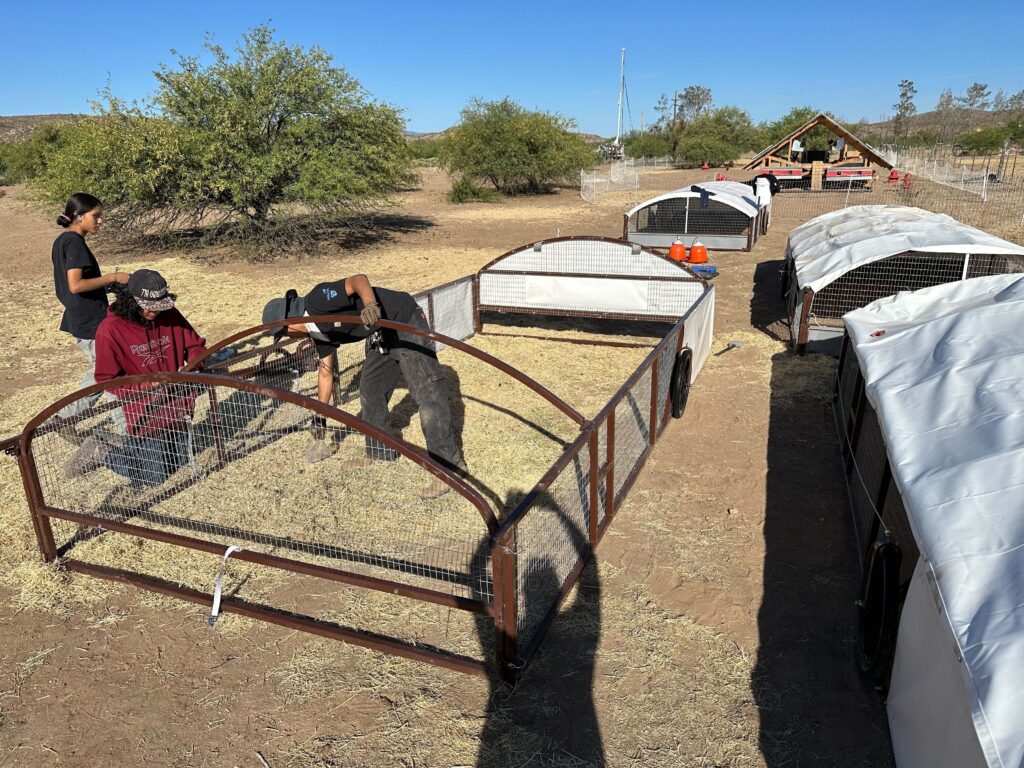
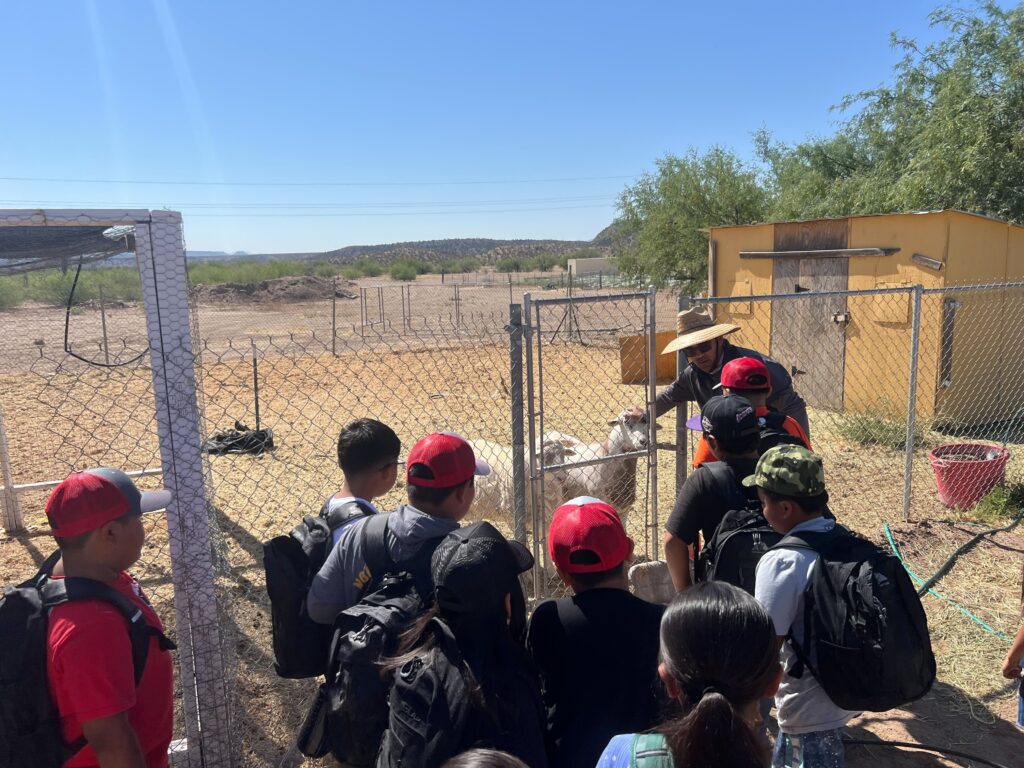
Nalwoodi Denzhone Community (NDC), a 501(c)3 non profit organization, aims to revitalize the Indigenous ecosystem on the San Carlos Apache Reservation through the application of regenerative agriculture principles that revitalize the soil and produce nutrient dense foods for the community. As the only food producing farm on the Reservation and operating in extreme desert conditions, NDC plans to implement a multispecies adaptive grazing plan that combines its new flock of 15 sheep with its laying hen operation with the hopes to create a thriving oasis that will connect people to the land, to their food, and to each other.
The Kiss the Ground grant has profoundly advanced our regenerative agriculture journey, filling us with gratitude and optimism. The funding enabled mobile chicken coops, critical for protecting dual-purpose chickens from predators in our desert environment. These coops enhance our ability to manage hens precisely, optimizing stocking rates and grazing practices. We are transitioning to twice-daily coop moves to prevent overgrazing and improve nutrient distribution. This has created a replicable model for the San Carlos community, with planned workshops to train 100 members, empowering regional adoption of regenerative practices. The coops also enable grazing between rows of our new micro-orchard, demonstrating a holistic approach to stacking enterprises for sustainable land management. This grant has strengthened our farm and laid a foundation for regional regenerative agriculture capacity.
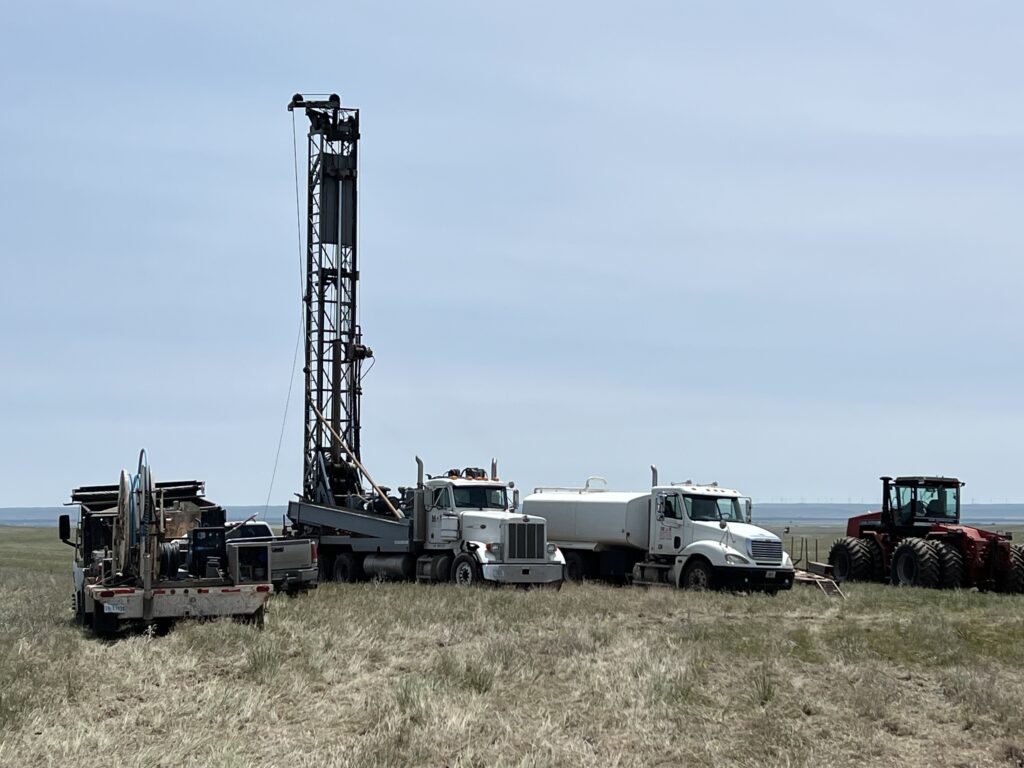
Kokes Cattle Company plans to integrate livestock into their diverse crop rotations to enhance soil health and structure in dryland farming systems using Vence virtual fencing technology. By implementing short-duration, high-density grazing on cover crops and crop residues, Kokes Cattle Company hypothesizes that soil health will improve over time, and will compare these results with a control field that employs traditional healing practices, ultimately facilitating the transition to no-till farming in a brittle climate.
We believe in constant learning and sharing knowledge with others. We enjoy using our ranch as a demonstration site hosting visitors and educational programs. We have hosted college groups, industry groups, local NRCS groups, and intend to host a field day for the local conservation district next year. I am running for my local FSA County Committee Board and if elected, I intend to empower local farmers and ranchers with the knowledge and skills necessary to adopt sustainable practices and enhance soil health. Kokes Cattle Company will serve as a valuable resource for the agricultural community, promoting resilience and sustainability in dryland farming systems.

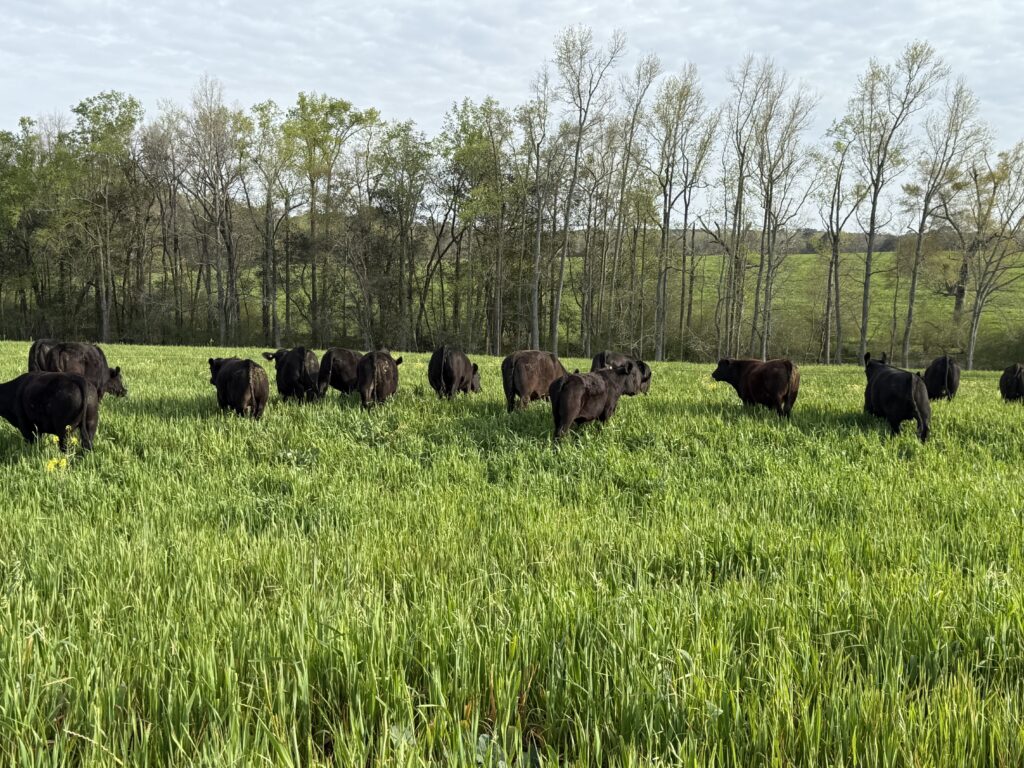
Provenance Farm plans to create a regenerative oasis for animals and fruit/nut production, and show other farmers in the area what can be done. The silvopasture project is set to take place in a 6-acre area, previously a field, which has remained fallow for over 20 years, and will include grafting fruit-producing pear varieties onto the well-established trees, incorporating white pines and larch that will serve as natural shelters to protect the cows and sheep from summer heat and winter winds, as well as planting chestnut and hazelnut trees for harvesting and food for the pigs.
This silvopasture project focused on establishing approximately six acres of integrated tree, forage, and livestock systems to improve biodiversity, future food production, and landscape resilience. While chestnut and hazelnut tree establishment faced significant challenges due to extreme summer heat and winter weather, the project generated valuable lessons in species selection, water management, and perennial crop establishment. Although planned pear tree grafting was postponed, the cover crop exceeded expectations by successfully overwintering and providing strong spring growth. Additional successes included invasive species removal, expanded grazing acreage, and improved understanding of livestock integration during establishment. Moving forward, the farm plans to replant trees using contour-based water management strategies and fall planting timelines to improve survival. Overall, the project reinforced that regenerative systems require long-term observation, adaptation, and stewardship, while producing valuable insights that can be shared with neighboring producers.


The goal of this project is to enhance soil health and promote regenerative agricultural practices on JL Brown Farms by acquiring a no-till drill. This essential equipment will enable JL Brown Farms to improve forage establishment and crop productivity while reducing soil disturbance, preserving organic matter, and minimizing erosion with the aim to build resilient, nutrient-rich soil ecosystems, sequester carbon, and increase biodiversity on their rotational grazing cattle farm.
The grant has enabled the ranch to plant more than 600 acres in a single winter grazing season using a new no-till drill, while also expanding regenerative practices across more than 3,000 acres through equipment sharing with neighboring farms. Increased winter forage establishment is improving livestock resilience and protecting soil from erosion. The ranch has also emerged as a regional demonstration site, with Miles speaking to multiple producer groups about regenerative farming, soil health, and long-term profitability, strengthening both local leadership and adoption of no-till systems.

Wild Type Ranch is converting 50 acres of degraded land into regenerative pasture using an adaptive grazing plan for its animals, including sheep, goats and poultry, as well as planting trees, and starting a Milpa-style community garden. The project includes installing fencing, water infrastructure, and planting diverse nut and fruit trees to reduce erosion. The Milpa garden will establish community engagement with local group like 4-H and FFA and produce will be donated to local food banks. This project is the first step in expanding regenerative agriculture on the farm.
This grant gave us the cushion and confidence to launch into production earlier than we would have otherwise. This was a learning year for us as we trialed multiple enterprises and tested the market for our products. Being able to seed cover crops and adaptively graze the existing pasture and cover crops on the first 50 acres was a big step toward converting the entire farm. We now have 109 acres of degraded row crop ground being healed through regenerative practices—one year ahead of schedule.
The head start afforded by this, our first grant, gave us leverage with the county to secure cost-share funding for next year for permanent fencing, as well as cost-share for our no-till drill. We plan to utilize the drill on other local properties, in addition to our own. Being able to start at a scale large enough to have product to sell has also established us in the community as a trustworthy provider of pastured proteins. With nearly $25,000 in product sales, we are positively impacting the local food economy.


Mud Ridge Ranch is using its grant funding to install secure perimeter fencing around the entire ranch with the goal to open all 170 acres for adaptive grazing. With fencing in place, Mud Ridge Ranch will be able to turn away from commercial row cropping practices and journey back into what the ranch was before, grazing land. The project will utilize adaptive grazing and other regenerative principles to heal the land and support native species that were there before. A secondary objective of this fencing project is to double the stocking density on the land, and over time, gain the customer base to feed twice the number of people off of the farm.
We now have 170 acres totally fenced in now that we are adaptively grazing cover crops on. We do a combination of warm and cool season cover crops to keep them grazing for as long as possible. We utilize virtual fencing on our cattle herd and our sheep flock and do multi species grazing. We are priming the soil as we are preparing to convert former row crop acres into native grasses.
Thanks to Kiss the Ground, I was able to increase our fenced area by 150% and extend our grazing season by over two months last year!
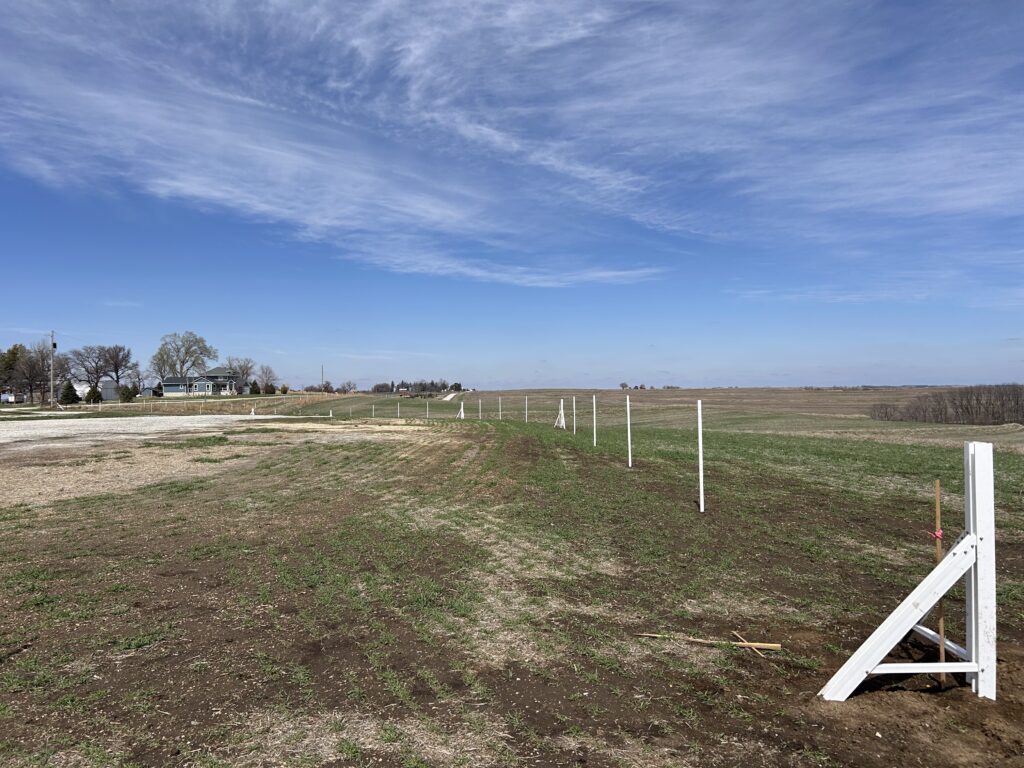
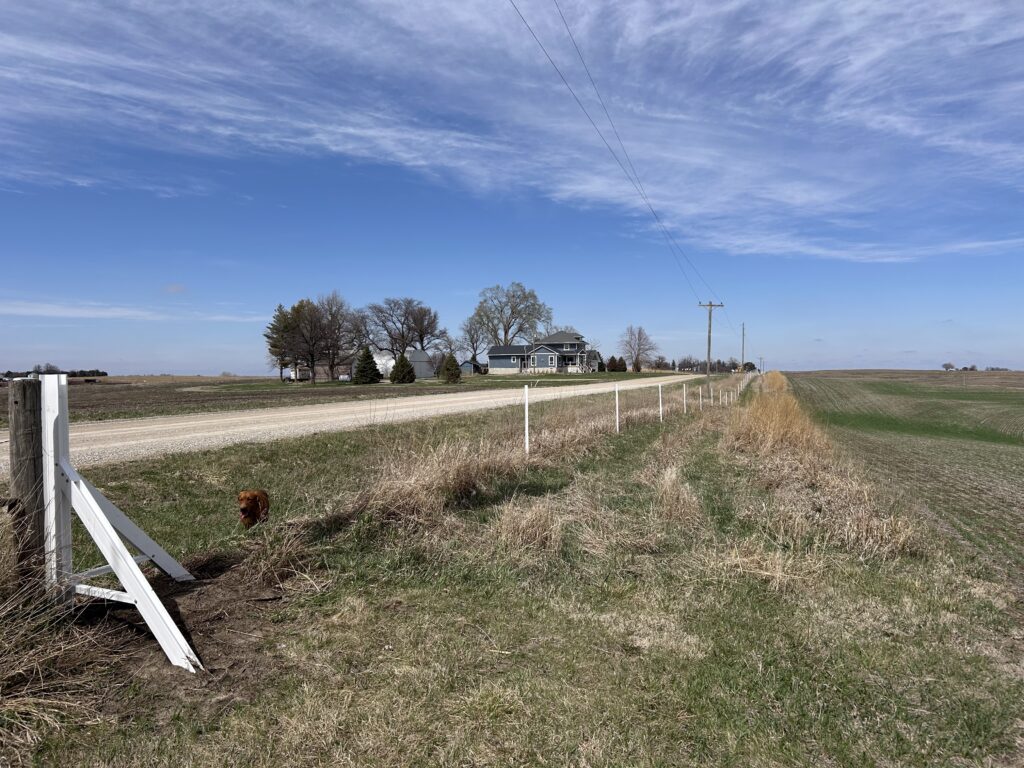
Vetted Farms is creating one-acre regenerative plots for veterans to grow vegetables, cover crops, and value-added crops while healing through land-based practices. With grant support, Vetted Farms will build mobile chicken coops, install fencing, and acquire essential equipment like a no-till drill and poultry fencing. The project will launch hands-on learning events for veterans and first responders, with a long-term vision of serving hundreds through workshops, mentorship, and equipment loaning in partnership with organizations like the Farmer Veteran Coalition of Texas.
The Kiss the Ground grant has been truly catalytic, helping us turn regeneration into a lived, community-supported practice while expanding our impact across both land and people. This grant didn’t just support our farm, it helped turn regeneration into something our whole community can see, learn, and grow together. With support from Kiss the Ground, we’ve been able to build soil, grow food, and create a space where veterans and our community come together around regeneration. This investment accelerated everything, from building healthier soil systems to creating a regenerative hub that brings veterans, families, and growers into the work.
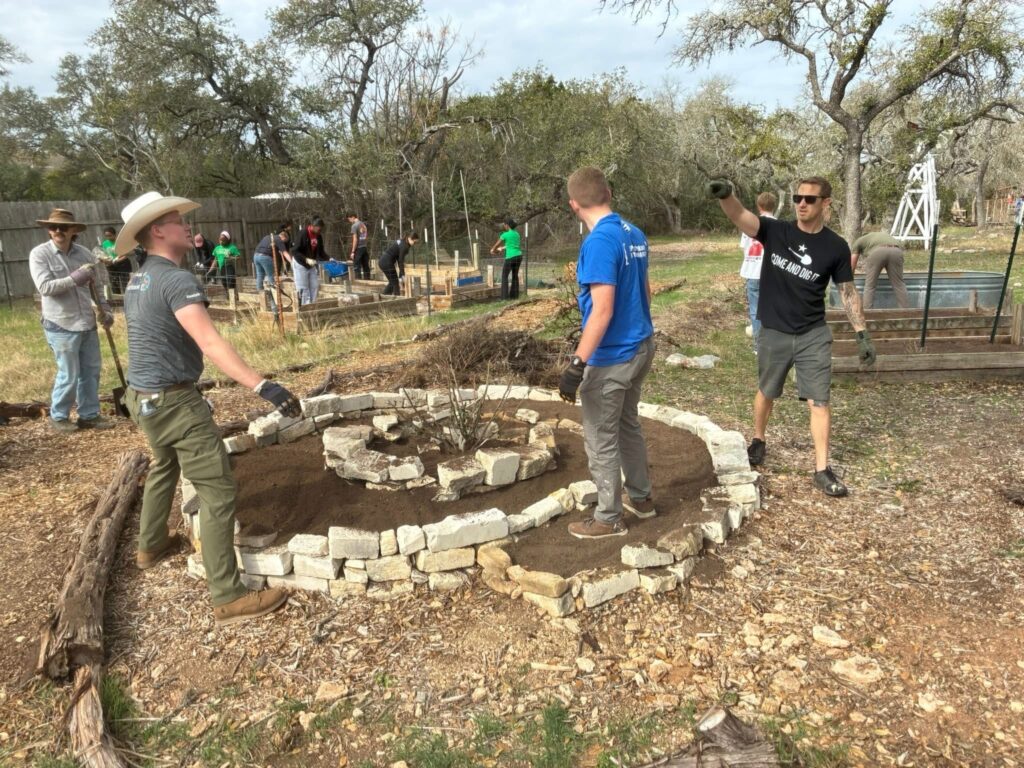
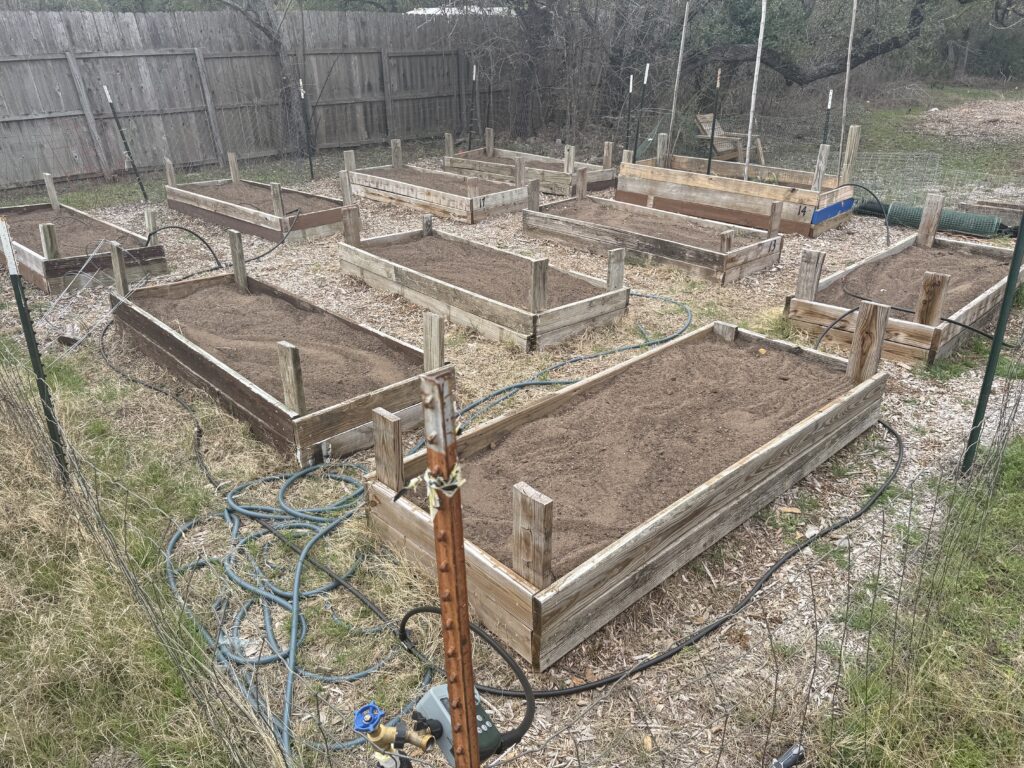
While Sonoma County is globally recognized for its lavish wine and food scene, Teravana is working to address the large socioeconomic and ecological disparity within the food system of Sonoma County by growing organic, local food for residents who often can’t access it. Through partnerships with schools and restaurants, Teravana is empowering people to grow their own food and build self and community resiliency by reconnecting to regenerative practices in agroforestry and native food ways. With this grant, they plan to expand their farm offerings, localize supply chains in existing affordable restaurants and schools, and introduce native foods into the food system in Sonoma County.
Living Pastures Farm is using its grant to efficiently implement Adaptive Multi-Paddock (AMP) grazing practices that will help reduce the amount of time, energy, and labor required in their regenerative grazing operation. Through adaptive grazing, Living Pastures Farm will work to regenerate the landscape and expand its regenerative grazing practices to additional acreage in order to provide more nutrient-dense chicken, pork, beef, and eggs to its local community.
The grant was a major help in us getting our business towards long-term financial sustainability while using regenerative practices. This year marked a major step towards breeding most or all of our own cattle, which will in the long run will provide better margins on our beef and create more predictability and stability for our expenses. The grant has really helped us get the infrastructure we need to do that.
We are one of a limited number of farms in the northern Virginia area producing grass-fed beef that is available for purchase to the general public. Many local families now get all or a significant portion of their beef (and chicken and pork) from us and return year after year.
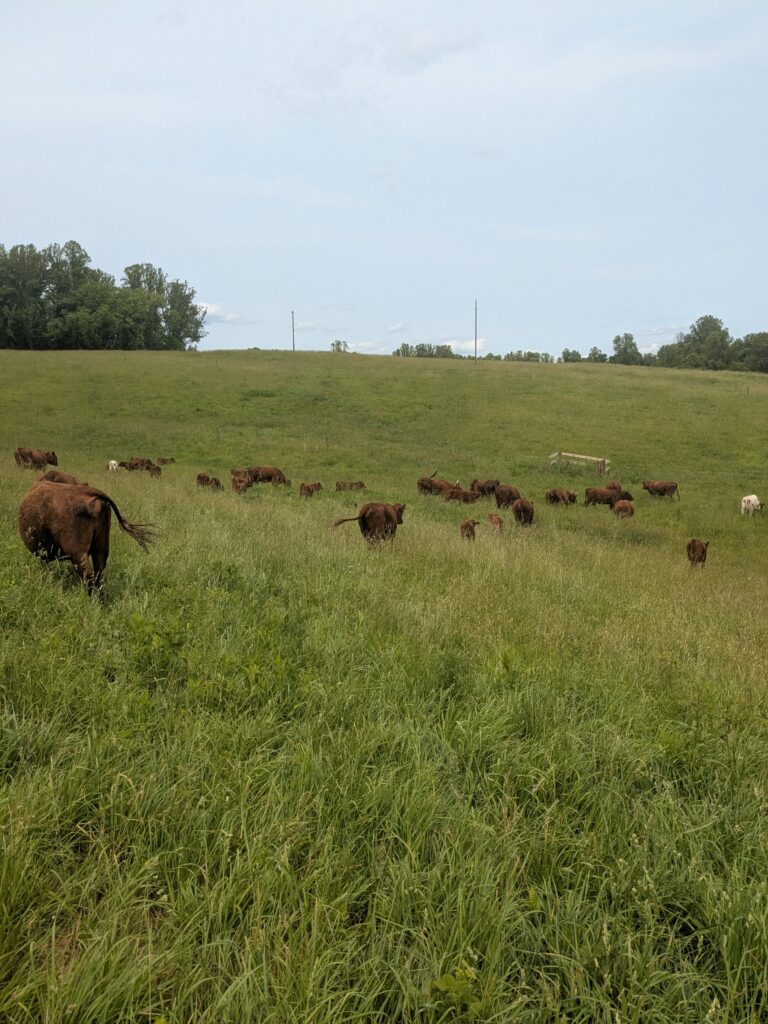
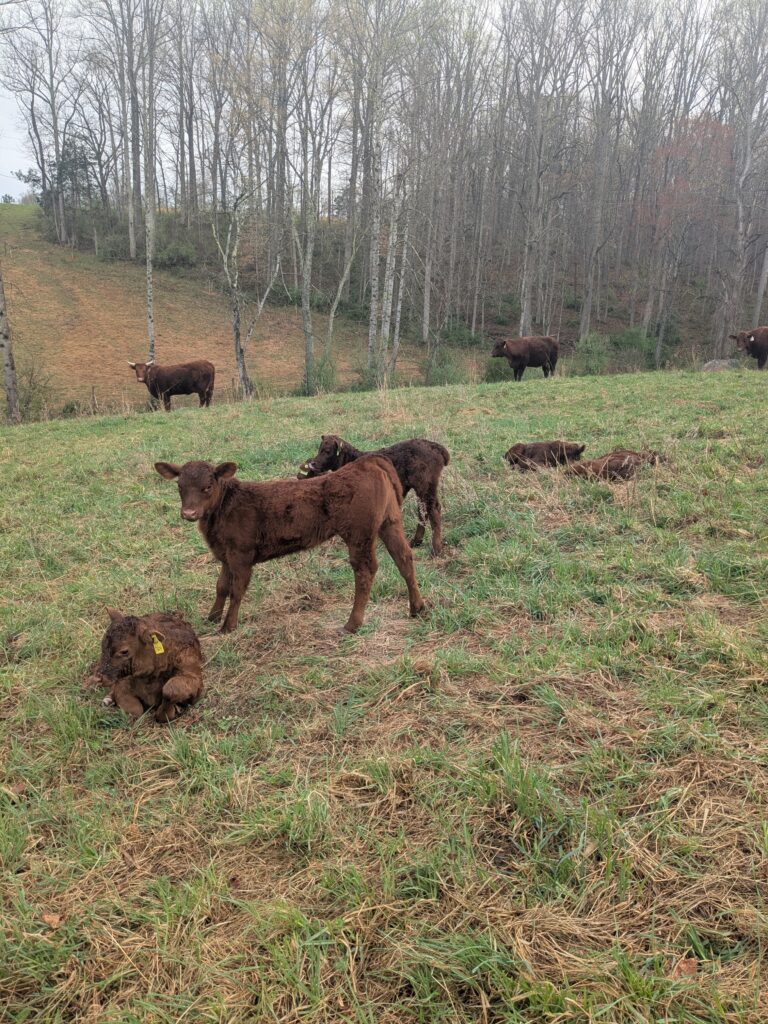
ML Ranch plans to implement high-density, short-duration grazing throughout its property using virtual fencing technology. By utilizing GPS-enabled livestock collars, ML Ranch will be able to more effectively manage its cattle without the need for physical fencing, with the ultimate goal of regenerating the land and creating healthier pastures. They hope to use the virtual fencing for several years and plan to track measurable improvements in soil health, water retention, and biodiversity throughout the property.
Virtual fencing collars were deployed across 1,300 acres, enabling precise high-density, short-duration grazing without the need for costly new fencing infrastructure. The technology allows the ranch to adapt grazing decisions in response to weather patterns, while reducing labor demands for cattle moves and improving quality of life for the ranch family. Early results show improved pasture recovery, stronger regrowth, greater plant diversity, and more efficient forage utilization.

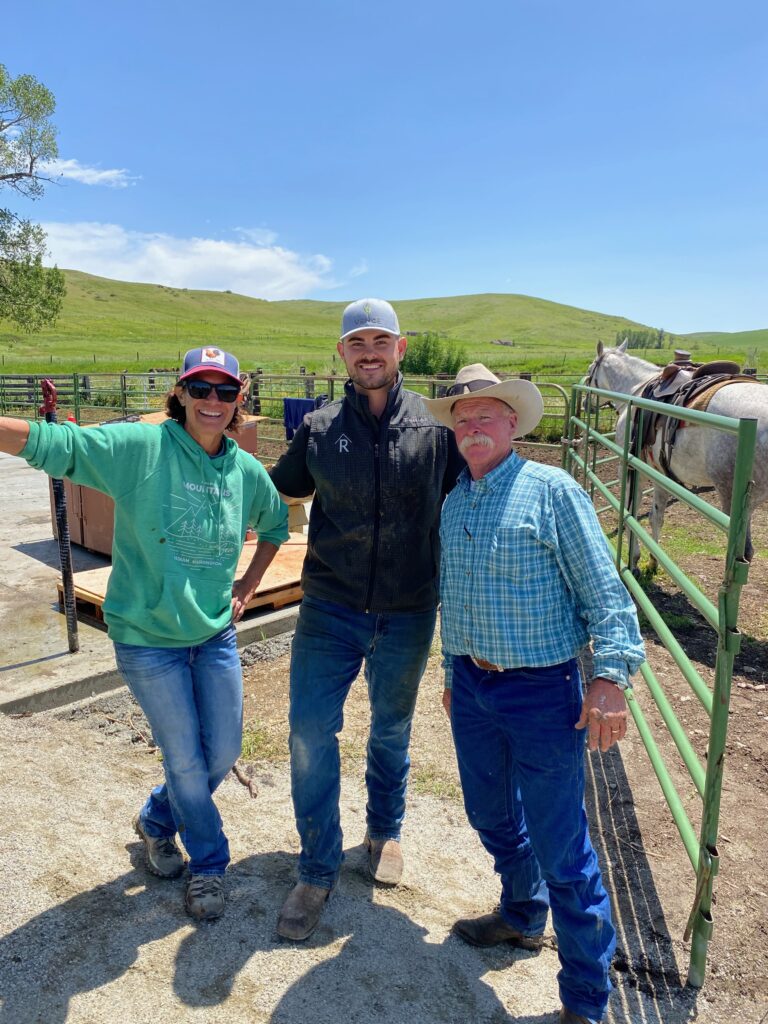
Farmer Cheryl Alston has created garden sites throughout the city of Goldsboro and maintains a three-acre garden on leased land from the city and owns a 19-acre farm. She is using her grant to build a structure for Barney’s Produce Mart, a project that will provide access to fresh, local vegetables for members of the community and engage residents in the production of food by growing healthy, chemical-free produce using regenerative practices.


Scott Landers has been practicing minimal till and cover crops, but is now looking to take this to the next level by going full no-till. Through his grant, he will obtain two key pieces of equipment—a roller-crimper to terminate cover crops and a no-till drill to successfully plant through the “mulched” cover. In addition to adapting no-till methods on his own farm, Scott plans to educate and share his new equipment with nearby farmers who are also interested in regenerative agriculture.
The grant has enabled the ranch to plant more than 600 acres in a single winter grazing season using a new no-till drill, while also expanding regenerative practices across more than 3,000 acres through equipment sharing with neighboring farms. Increased winter forage establishment is improving livestock resilience and protecting soil from erosion. The ranch has also emerged as a regional demonstration site, with Miles speaking to multiple producer groups about regenerative farming, soil health, and long-term profitability, strengthening both local leadership and adoption of no-till systems.


Mace Chasm Farm manages a 100% grass-fed, rotationally grazed cattle herd that has outgrown its current cattle corral. Therefore, Mace Chasm Farms plans to use its grant to expand its cattle corral to an appropriate design and size that offers increased safety for the farmers as they move the herd through the corral, and a more comfortable and intuitive process for the cattle. This will allow Mace Chasm Farms to continue its successful regenerative grazing management more efficiently.